
Planting Fruit Trees in Autumn: Timing and Steps
Updated on 10/28/2026
Autumn is the main planting season for fruit trees in Moldova. Trees lifted from the nursery after leaf fall are dormant, the soil is still warm and moist, and the roots have time to recover before spring. A tree planted correctly in autumn starts growing with the first warm days.
Below are the right timing, the species that suit autumn planting and those that are safer in spring, plus the planting steps for a commercial orchard or a garden.
When to plant fruit trees in autumn
Trees are planted once they are dormant, after leaf fall, and before the soil freezes. In Moldova the usual window runs from late October to late November. In long autumns you can plant into December, as long as the soil is not frozen or waterlogged.
The earlier you plant within this window, the more time the roots have to settle before hard frost. Do not plant into frozen or muddy soil: it does not settle around the roots and leaves air pockets.
Which species to plant in autumn
Good in autumn: apple, pear, plum, sweet cherry, sour cherry, walnut, currant, raspberry and blackberry. Their wood is frost-hardy and they benefit from an early start in spring.
Safer in spring: peach, nectarine, apricot and almond, especially in areas with cold winters or on heavy, wet soils. Young trees of these species are more sensitive to frost in their first winter, and many growers plant them in early spring.
Container blueberries can also go in during autumn, provided the soil is acidic and the plants are watered. See our guide to planting blueberries.
Guide calendar for a new orchard
| Step | When |
|---|---|
| Soil test | summer or early autumn |
| Choice of varieties, rootstocks and pollinators | summer |
| Tree order | summer or early autumn |
| Deep ploughing and base fertiliser | August–September |
| Tree delivery | after leaf fall |
| Planting | until the soil freezes |
| Earthing up and trunk protection | right after planting |
| Heading back the young trees | spring, before bud break |
Preparing the site
Start with a soil test. pH, organic matter, phosphorus and potassium decide which corrections you make before planting. Phosphorus and potassium are worked in deep during ploughing, because later they do not easily reach the roots.
Check drainage. Water standing around the roots in winter makes them rot. In intensive orchards, the trellis and irrigation lines go in before or right after planting.
Receiving and storing the trees
On delivery, check the roots: they should be moist, fresh when cut and free of mould. The graft union should be intact.
Roots must never dry out, not even for a few hours in the wind. If you are not planting straight away, heel the trees in: lay them at an angle in a trench, cover the roots with soil and water them.
Before planting, cut back broken or crushed roots to healthy tissue. The local practice of dipping roots in a slurry of clay, manure and water keeps them from drying and improves contact with the soil.
Planting steps
- Pit. Make it large enough for the roots to fit without bending.
- Depth. Keep the graft union 5–10 cm above the soil. If you bury it, the scion can root on its own and you lose the effect of the rootstock.
- Roots. Spread them out, work fine soil between them and firm gently from the edge toward the trunk.
- Watering. Water right after planting, even if the soil looks moist. Water settles the soil around the roots and removes air pockets.
- No nitrogen in the pit. Do not put nitrogen fertiliser or fresh manure next to the roots. It can burn them.
- Earthing up. Mound soil around the base of the trunk for winter and pull it back in spring.
- Support. Tie the tree to a stake or wire without squeezing the bark.
- Protection. Fit trunk guards or mesh against hares and check for mouse runs around the trees.
Pruning after planting
For autumn-planted trees, heading back is usually done in spring, before bud break. That way the cuts are not exposed to frost in the first winter, and you can see which buds came through winter well.
Common mistakes
- Burying the graft union.
- Letting roots dry out during transport or while waiting.
- Putting nitrogen fertiliser straight into the pit.
- Planting into frozen or waterlogged soil.
- Skipping watering because "it is autumn".
- Ordering too late. For commercial orchards, the varieties and rootstocks you want should be reserved early.
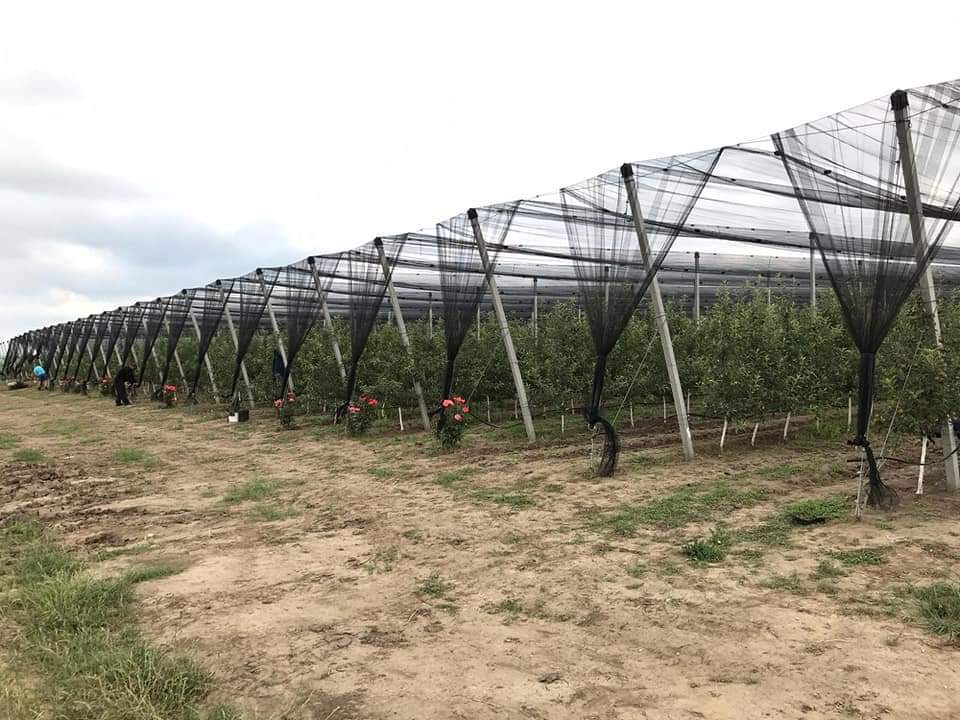
Before planting, read how to choose the right varieties, check sweet cherry pollinators and see why anti-hail nets matter. For tree orders and advice, use the contact page.
Frequently asked questions
How late can fruit trees be planted in autumn?
Until the soil freezes. In Moldova that is usually the end of November, and into December in long autumns if the soil is not frozen or waterlogged.
Should autumn-planted trees be watered?
Yes. Watering right after planting is essential, even if it rains. It settles the soil around the roots.
Should I prune trees planted in autumn?
Heading back is usually done in spring, before bud break. In autumn, only cut broken roots and branches.
Which trees should not be planted in autumn?
Peach, nectarine, apricot and almond are safer planted in spring in areas with cold winters or on heavy, wet soils.
What if the trees arrive when the soil is already frozen?
Heel them in at a sheltered spot or keep them in a cool, moist store, then plant in early spring.
Further reading: Oregon State University Extension, planting in fall or spring.