
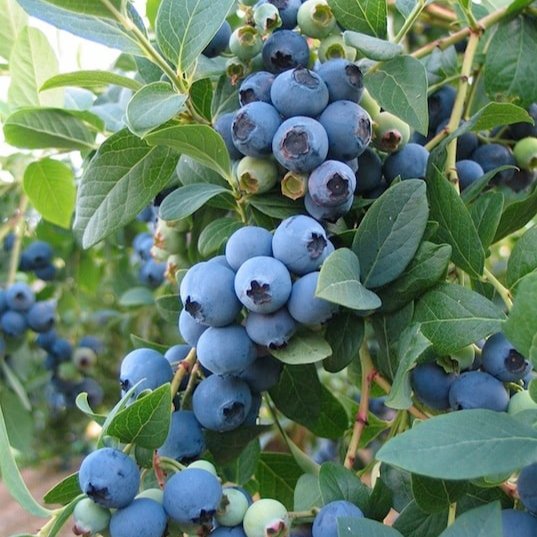
Planting Blueberries: Soil, Pots and Irrigation
Updated on 8/9/2026
A blueberry planting starts well when the root zone is acidic, excess water drains, moisture stays consistent and the cultivar mix serves one market. Pot size matters, but it cannot rescue the wrong field.
In a Raludor video from a client plantation, the most practical questions were not theoretical. People asked whether the plants were for sale and how many litres the pots held. That is a fair question. For a commercial planting, litres are only one line on the label.
Start with soil and water tests
Cultivated blueberries need an acidic root zone. University guides for highbush blueberries generally place the useful soil pH between 4.5 and 5.5. Above that range, iron uptake can become difficult, leaves may turn yellow, growth can slow and yield can fall.
Do not correct pH by eye. Test the soil and water, then calculate amendments for the actual soil texture. Elemental sulphur works slowly. Autumn can therefore be a valuable time to prepare ground for spring planting.
Water deserves the same attention as soil. Water with high alkalinity can push root zone pH upward even when the substrate was prepared correctly. Put water analysis into the plan before the first yellow leaves appear.
Good drainage and steady moisture
Blueberries have fine, shallow roots. They handle neither standing water nor repeated drying well. The field must remove excess water, while irrigation delivers controlled and consistent amounts.
In heavy soil, filling one hole with peat can create a container that traps water. A commercial project needs the whole row profile, drainage and substrate structure designed together.
Mulch helps stabilise moisture and root temperature. Check the chosen material. An alkaline compost can work against the pH target.
How many litres should the pot hold
There is no single correct pot volume for every project. A larger pot may contain a more developed plant, but the buyer should also inspect age, shoot count, root distribution and leaf health.
Remove the plant carefully and inspect the root ball. Roots should occupy the substrate without forming a hard, tight circle along the wall. Loosen circling roots gently at planting so they can move outward.
Commercial guides note that larger plants can go directly into a prepared field, while very young stock may need another growing season in a nursery bed. The business decision should compare plant cost, establishment rate and time to a strong bush.
The useful supplier question is not only how many litres the pot holds. Ask the plant age, propagation method, cultivar, date of transfer into that pot and the root system you will receive.
Design spacing around equipment
Many commercial guides show highbush plants roughly 1.2 to 1.5 metres apart within the row and rows roughly 2.4 to 3 metres apart. Those figures are not a recipe for every farm in Moldova.
Tractor width, harvest platform, irrigation, cultivar vigour and sales model may change the layout. A narrow alley saves land on paper but may make every pass more expensive for years.
Choose cultivars as a calendar
Duke is an early, vigorous cultivar with firm, uniform fruit. Bluecrop is a productive middle season reference with large fruit and a classic sweet flavour with light acidity. Together they can spread harvest and may support cross pollination when bloom overlaps.
A commercial farm does not use two cultivars merely for variety. They need to distribute picking labour, serve the same sales channel and fit the cooling, grading and delivery capacity.
View Duke, Bluecrop and the blueberry catalogue. Raludor is an official Polska Borówka distributor and can match cultivar choice to the field. Send soil results and field dimensions through the contact page.
When to plant blueberries in Moldova
Container plants can be planted at several points in the season when the soil is workable, roots will not stand in water and the plant has time to establish before stress. Autumn planting can work on some sites, but risk rises when temperatures fall quickly or soil moves through repeated freezing and thawing.
For many projects, the best use of autumn is preparation: testing, pH adjustment, drainage, plant ordering and irrigation installation. Set the planting date from the site, plant type and local forecast.
Frequently asked questions
What soil pH do blueberries need?
Most guides recommend about 4.5 to 5.5 for highbush blueberries. Test both soil and water before calculating amendments.
Is a blueberry in a larger pot always better?
No. Pot volume may indicate a more developed plant, but age, shoots, health and root architecture matter as well.
Can blueberries tolerate standing water?
No. They need steady moisture and good drainage. Even short periods with roots deprived of air can damage the plant.
Can I plant blueberries in autumn?
Yes, under suitable conditions and with appropriate plants, but risk depends on temperature, drainage and establishment time. On some sites, autumn is more valuable for preparing a spring planting.
Technical sources: University of Minnesota, commercial blueberry production, Penn State, highbush blueberry production and Penn State, blueberry site preparation.