
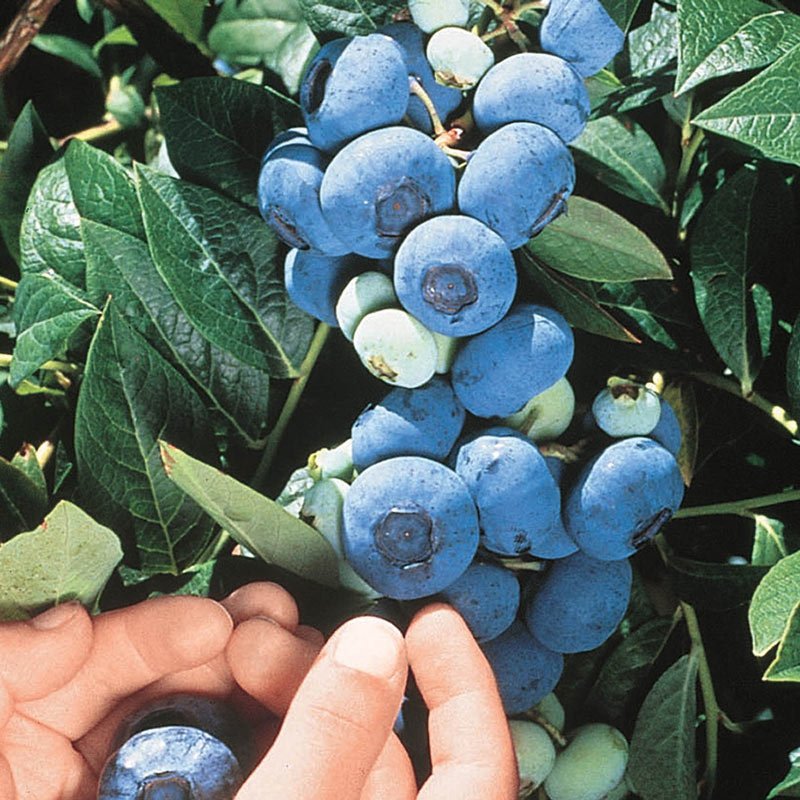
Chandler Blueberry: Very Large Fruit and a Long Harvest
Updated on 10/28/2026
Chandler is a northern highbush blueberry known for very large berries. It was bred by the research service of the US Department of Agriculture (USDA-ARS) and released in 1994. It ripens after Bluecrop, in mid-to-late season, and is picked over 4–6 weeks.
The combination of large fruit and a long harvest makes it popular with farms that sell direct and with home growers. Below is what to know about the variety, how it is pollinated and how it compares with other blueberries in the Raludor catalogue.
Chandler blueberry at a glance
| Criterion | Chandler |
|---|---|
| Origin | USDA-ARS, USA, 1994 |
| Group | northern highbush |
| Ripening | mid to late, after Bluecrop |
| Harvest length | 4–6 weeks |
| Vigour and yield | high |
| Fruit | very large, light blue |
| Taste | sweet, rich, aromatic |
| Firmness | moderate |
| Winter hardiness | suited to USDA zones 4–7 |
The fruit
Chandler berries are among the largest of the commercial blueberry varieties. Size depends on crop load, though: in years with a very heavy crop and too little water, berries stay smaller. Thinning through pruning and steady irrigation keep the size up.
The taste is sweet and aromatic. Firmness is moderate, so the fruit suits fresh local sales better than long-distance transport.
Who it suits
- Direct sales and pick-your-own. Large berries attract buyers, and the long harvest means fresh fruit for a month or more.
- Small farms and gardens. One variety covers a long picking period.
- Less suited to machine harvesting and distant export, where very firm fruit and a concentrated harvest matter, as with Draper or Liberty.
Pollination
Highbush blueberries are largely self-fertile, but cross-pollination with another variety blooming at the same time usually improves fruit set and berry size. We recommend at least two varieties in a planting, with bees or bumblebees present at bloom.
Varieties in the same ripening group usually bloom close together. Still, check bloom overlap under your site conditions before you fix the layout.
Chandler compared with other blueberries
| Variety | Ripening | Fruit | Firmness | Note |
|---|---|---|---|---|
| Duke | early | medium to large | firm | blooms late, ripens early |
| Bluecrop | mid, July | large to very large | firm | reference variety, very winter-hardy |
| Chandler | mid to late | very large | moderate | 4–6 week harvest |
| Darrow | late, end of July–August | very large | firm | dessert quality |
| Liberty | late, end of August | medium to large | very firm | stores well |
| Elliot | very late, August–September | large | very firm | tart until fully ripe |
Planted together, these varieties cover the blueberry season from early summer into September.
Growing
Chandler needs the same conditions as other highbush blueberries: acidic soil with a pH of 4.5 to 5.5, rich in organic matter and well drained, plus drip irrigation and mulch. On Moldova's neutral or calcareous soils, blueberries are usually grown in large containers or raised beds with acidic substrate.
Full details on soil, containers and irrigation are in Planting Blueberries: Soil, Pots and Irrigation. Browse all blueberry varieties in the catalogue or ask for a recommendation through the contact page.
Frequently asked questions
Is Chandler blueberry self-fertile?
It is largely self-fertile, but it crops better next to another variety that blooms at the same time. We recommend at least two varieties.
When does Chandler blueberry ripen?
In mid-to-late season, after Bluecrop. Picking lasts 4–6 weeks, usually through the second half of July and August.
How winter-hardy is Chandler blueberry?
The Raludor sheet lists it for USDA zones 4–7, which covers winter conditions in Moldova.
Can Chandler be grown in a container?
Yes. It is vigorous, so it needs a large container, acidic substrate and regular watering.
Why are the berries smaller in some years?
Most often because of a heavy crop and a lack of water while the fruit is sizing. Fruiting pruning and steady irrigation help keep berry size.
Sources: USDA ARS, Agricultural Research, 1998, Penn State Extension, highbush blueberry production and the Raludor page for Chandler.