
Royal Helen or Regina: Which Late Cherry Fits?
Updated on 8/9/2026
Royal Helen and Regina are late cherries with large, firm fruit. Royal Helen is self fertile and draws attention through size. Regina needs compatible pollinizers, but growers value its flavour, storage and useful resistance to rain cracking.
A Raludor reel about Royal Helen collected roughly 1,800 reactions. The reason is visible at once. Large fruit needs no long explanation. In an orchard, however, size is only the beginning of the decision.
Royal Helen at a glance
Royal Helen is a late cultivar from the Zaiger breeding programme, managed in Europe by IPS. Raludor places it about 32 days after Burlat, very close to Regina. The tree has medium vigour, high productivity and self fertility.
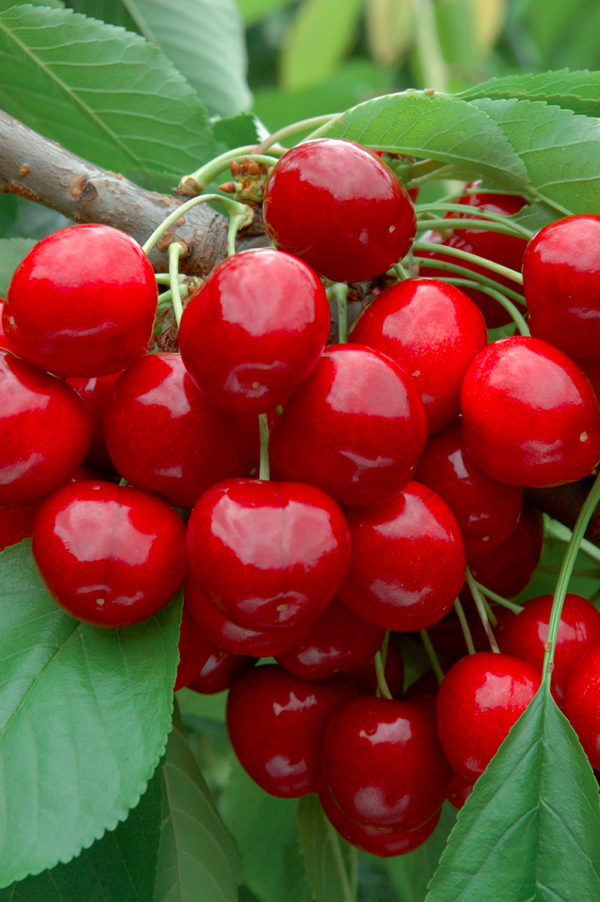
The fruit is round, very dark and firm. Raludor gives reference size of 28 to 30 mm and sugar of 17 to 19 degrees Brix. Commercial presentations in other regions have reported larger fruit. That variation is normal. Crop load, rootstock, water and climate change final size.
Oregon State University describes large fruit, excellent firmness and good flavour with a mild sweet and sharp note. The same source notes a moderate risk of rain cracking. Royal Helen is promising, not invulnerable.
Regina at a glance
Regina is a familiar reference at the end of the cherry season. Raludor places it about 30 days after Burlat, with late bloom and strong vigour. The fruit is heart shaped, 28 to 30 mm, with dark red flesh and a reference near 20 degrees Brix.
Regina is self sterile. Raludor lists Irena, Carmen, Kordia and Rubin as pollinizer options. The final choice must follow local bloom overlap.
The cultivar is known for firmness, storage and low sensitivity to cracking. Those traits matter when fruit must be handled and sold over a longer interval.
Quick comparison
| Criterion | Royal Helen | Regina |
|---|---|---|
| Maturity | Late, about 32 days after Burlat | Late, about 30 days after Burlat |
| Pollination | Self fertile | Self sterile |
| Vigour | Medium | Strong |
| Raludor reference size | 28 to 30 mm | 28 to 30 mm |
| Reference sugar | 17 to 19 Brix | About 20 Brix |
| Shape | Round | Heart shaped |
| Cracking | Medium sensitivity | Low sensitivity |
| Main role | Size and simpler pollination | Flavour, storage and rain performance |
When Royal Helen makes sense
Royal Helen belongs on the shortlist when a grower wants a late cherry with large fruit and a simpler pollination layout. Self fertility can be valuable in small plots or blocks where each row needs to remain commercial.
Self fertile does not mean independent from weather. Bee flight, temperature and rain during bloom still influence fruit set. Large size also needs management. Leaf balance, irrigation and crop load matter.
When Regina makes sense
Regina deserves attention when storage, flavour and cracking risk carry more weight. For farms selling after summer rain or shipping fruit over distance, those traits may be worth more than a record fruit size.
Pollination is the hidden cost. Pollinizer rows are not wasted space. They are part of the production system. If they are added late, an excellent cultivar can still set a weak crop.
Can they be planted together?
Royal Helen and Regina can play complementary roles in a late block, but do not assume one automatically pollinates the other. Compatibility and bloom overlap need confirmation in the design.
Both extend the season after early cultivars. Because their harvest windows are close, they will not spread all labour on their own. Picking, cooling and grading capacity must handle the peak days.
View Royal Helen, Regina and the cherry catalogue. Ask for a site specific cultivar and pollination calendar through the contact page.
Frequently asked questions
Is Royal Helen self fertile?
Yes. Raludor and Oregon State University describe Royal Helen as self fertile. Pollinator activity and suitable weather still affect production.
Does Royal Helen ripen before or after Regina?
The windows are very close. Raludor places Regina about 30 days after Burlat and Royal Helen about 32 days after Burlat. Local order can move.
Which cultivar handles cracking better?
Regina is known for low sensitivity to cracking. Royal Helen has moderate sensitivity. No cultivar removes the risk created by rain, crop load and maturity.
Why does reported Royal Helen size differ between sources?
Raludor gives 28 to 30 mm, while some commercial field presentations report more than 32 mm. Both can be valid observations under different conditions. Rootstock, crop load, water, nutrition and climate influence size.
Technical sources: Oregon State University, sweet cherry cultivars for fresh market, the Royal Helen plant patent, a Salvi Vivai field presentation and the linked Raludor sheets.